Showing posts with label easy. Show all posts

Friday, September 28, 2012

Layered Liquids

★What do you think would happen if various liquids are poured into a cup?


★Time: 30 minutes (including set up and cleaning up)

★Cost: $3 (However, you could find most of the materials at home)

★Area of Science and Topic: General Science

★Learning Objectives: Students will be able to learn which liquid has the most density and which has the least.

★Materials:
1. a cup
2. dish washing soap
3. corn syrup
4. honey
5. ethyl alcohol
6. vegetable oil
7. food coloring (optional)
8. Water

★Procedure:
1. First, get all materials needed.
2. In order, pour the following liquids into the cup.
   i. honey
   ii. corn syrup
   iii. dish washing soap
   iv. water
   v. vegetable oil
   vi. ethyl alcohol
3.See what happens!
4. Don't forget to clean up your area when you are done.

★Tips: To get the kids more involved, let them pour the liquids.
Don't pour in the liquids too far/high from the cup.

Wednesday, February 15, 2012

Let's Make a Parachute!

★We are going to make a small parachute and watch what happens when you drop it.


★Time: takes around 10-15minutes

★Cost: $0 (if you have a piece of plastic bag and pieces of string)

★Materials:

1. A plastic bag

2. Scissors

3. String

4. A small piece that you can weigh

★Area of Topic: Physics

★Learning Objectives:

  Students can learn about air resistance.

★ Procedure

1. Cut out a large square from your plastic bag or material

2. Trim the edges so it looks like an octagon (an eight sided shape)

3. Cut a small whole near the edge of each side.

4. Attach 8pieces of string of the same length to each of the holes.

5. Tie the pieces of string to the object you are using as a weight.

6. Use a chair or find a high spot to drop your parachute and test how well it worked, remember that you want it to drop as slow as possible. :).

7. Compare the speeds of droppinf of plain thing and the thing with parachute.

★ Tips for making the experiment work best with kids:

1. Make sure that the piece of plastic bag is not torn.

2. Do not let the kids use the scissors in case of an accident

★Explanation:
The item with parachute will fall slower than the item dropped only. It is because of air resistance. As the surface gets bigger, the air resistance it gets get bigger. Since you expanded the surface area of the item with the parachute, the parachute will drop slower than the plain item.

★ Online resources for this experiment

http://pbskids.org/rogers/R_house/object3.htm
http://www.sciencekids.co.nz/experiments.html


Wednesday, January 25, 2012

Blanketed House


  • Time:                                     about 3 minutes 
  • Cost $:                                  $0 
  • Area of Science and Topic:     Environmental science 
  • Learning objectives 
    • The kids should be able to learn about the logic behind the global warming. 
      • The kids should be aware that the earth, indeed is heating up.


Material:


  •    Blanket 


Procedure:

1. Find a flat surface


2. Lie down and totally cover your upper body with blanket.


3. Feel how the temperature increases within the blanket.


*Tips for making the experiment work best with kids:
  • Perform this experiement in a hot environment, or under the sun.
    • Kids will experience greater amount of temperature increase under the blanket.


Online resources for this experiment:

  • Videos (links) 
  • Websites (links)

Saturday, January 14, 2012

Pin Hole Camera

      
                                               ★Pin Hole Camera 

* This experiment is used to teach about optics in physics. Through Pin Hole Camera, kids can learn the concept of the function of the eyes (upside down effect due to light that passes through a small hole).
                          

★ Time: about 10 minutes (including setup and cleanup)

★ Cost: $ 0.00            (if all the materials are provided)

               $ 0.20            a piece of dark paper (best color black)
               $ 0.50            scotch tape

             * options for container
               $ 1.75            a pringles container
               $ 0.20            a piece of dark paper
               $ 0.00 (free)  a container found from garbage

             * options for a translucent cover
              $ 2.50            a roll of wax paper (but only a piece is needed)
              $ 0.00            a cover of pringles (comes with pringles)
              $ 0.00            a translucent cover found from garbage

             Total Cost: about $ 0.70 - $ 3.20
         ★ Area of Science and Topic: Physics (with Biology application)

★ Learning objectives: Students will understand the path of light.
                                          Studens will understand how eyes perceive things.


★ Materials:  


                        1 piece of dark paper (best color black)
                        1 pringles container
                        1 cover of pringles
                        1 sharp object such as screw driver (to put a hole)
                        1 scotch tape

★ Procedure:
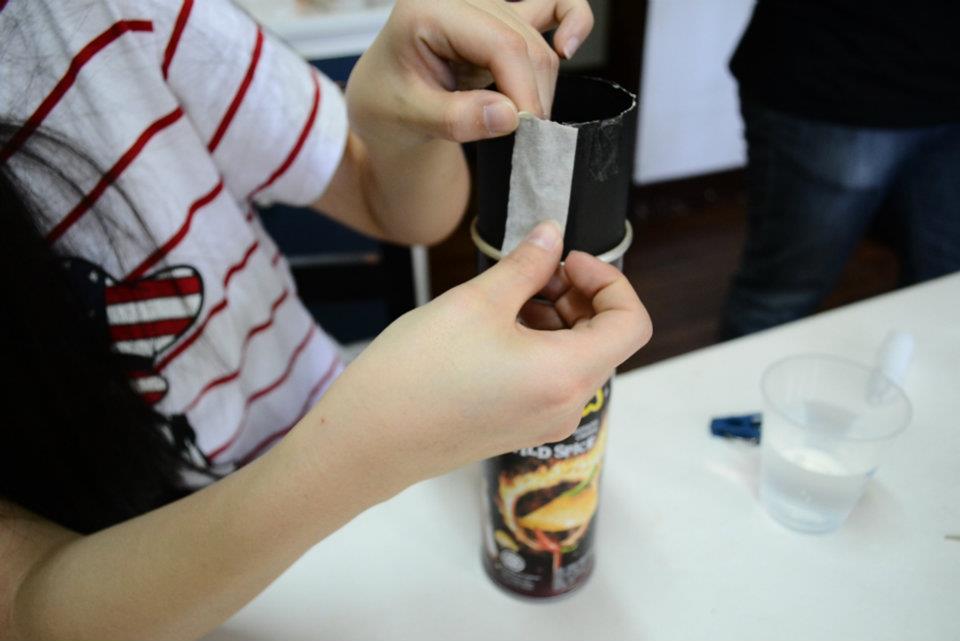
Figure 1. Roll the black piece of paper into a cylinder shape
                       Then, use scotch tape to make it into a cylinder (shape)


Figure 2. Result of the procedure done in Figure 1


Figure 3. Put the small piece of translucent cover on the 
         cylinder shape thing (product in Figure 2)


Figure 4. Result of Figure 3


Figure 5. Make a small hole on the bottom of 
                  Pringles container with a sharp object


Figure 6. Put the product (Figure 4) inside the Pringles container
                      (the translucent cover facing or placed inside the container)


* Moving the black cylinder shaped thing (pulling out and in), observe an object placed under           the sun. A strong light such as sunlight is needed in this experiment to observe upside-down view of the object.

*Some good options for the object to be observed:   curtain (when the sun hits the curtain)
                                                                            candle


★ Tips for making the experiment work best with kids:
             a) Do not push the camera when someone is looking through it.
             b) Let the kids finish the snack before using it for the experiment.
             c) Wash the can of Pringles before using it for the experiment.


Why does it float?

 ★ If you drop an egg into water, egg usually sinks to the bottom, but what if you add salt into water? The egg will start to float slowly. This experiment can be explained by the differences in density. When you add salt into water, then salt water becomes denser than the normal water. And denser water is floating goods easier than normal water. This can be also found in real life, which is sea water. Seawater makes you to float easier in river or lakes.


★Time: about 5minutes (set up and cleaning included)

★Cost: $0 (if you have all the materials and water in the house)

★Area of Science: General Science

★Learning Objectives: Students can understand the differences in density of liquids.

★Materials :
1. One egg
2. Water
3. Salt
4. A Tall Drinking Glass / Transparent water bottle

★Procedure:
1. Pour water into the glass.
2. Gently drop an egg into glass and watch what happens
3. Stir in lots of salt (about 6 tablespoons). Be careful not to break egg.
4. Watch what happens to egg.

 ★Tips to make kids most successful in this experiment
1. Remove egg from the water cup before you stir salt into water.
2. Make sure not to use broken eggs.
3. Both raw and hard boiled eggs are fine.

(Similar experiment in same concept but not the same experiment)